This Anti-aging Trick Has Been Kept Secret By Dermatologists Until Now (You Won’t Believe The Reason!)
By Dr. Blaine Schilling | Medical Doctor & Anti-Aging Expert
February 11, 2025 | 6 min read
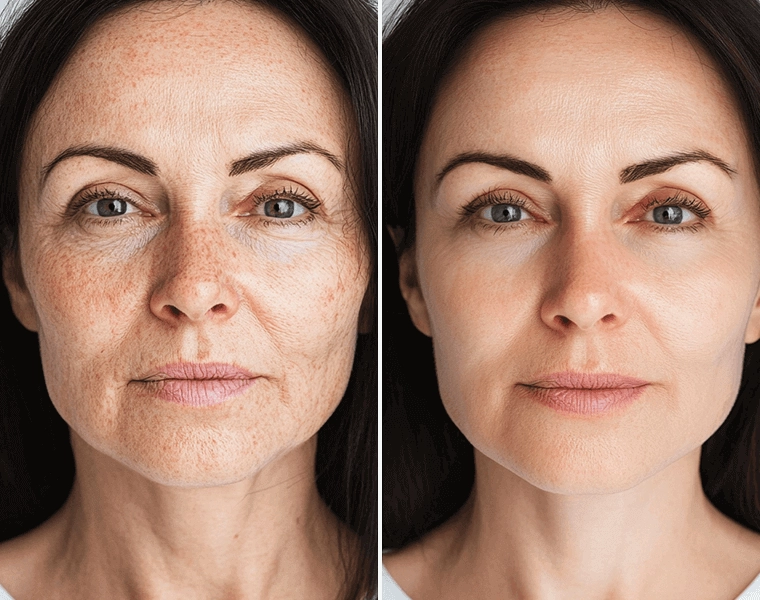
Every morning, millions of women look in the mirror and see the same frustrating problem:
Puffy, saggy bags under their eyes that make them look exhausted and years older.
As a medical doctor and anti-aging specialist for over 30 years, I’ve seen countless women struggle with this issue.
That’s why I’ve decided to publish this list of surprising culprits that many dermatologists and skincare experts never mention to their clients.
Plus, what I consider to be the #1 cause of eye bags that’s completely ignored, even though it’s been researched by Harvard Medical School.
I will get into more detail about that below, but first let me tell you about the biggest culprits behind tired-looking eye bags.
#5 Why Your Pillow Is Secretly Aging Your Eyes While You Sleep

Think that expensive pillowcase is protecting your skin? Think again.
Pillowcases, regardless of material, trap an alarming amount of oils, dead skin cells, and bacteria that transfer to your delicate eye area night after night.
But there’s an even bigger problem: the constant pressure and friction creates microscopic damage that accumulates over time, leading to weakened skin structure around your eyes.
Even more surprising? Those silk pillowcases you’ve invested in might actually be making things worse by trapping heat around your eye area.
#4 The Common Breakfast Food That's Making Your Eye Bags Worse

Here’s something that shocks every patient I share this with: your “healthy” breakfast could be the biggest culprit behind your puffy eyes.
Most whole grain breads and cereals contain hidden sodium levels that rival junk food. Even that morning yogurt parfait can trigger fluid retention around your eyes.
But it’s not just about salt – certain “superfoods” can actually increase inflammation around your eye area, creating a constant battle that no amount of eye cream can fix.
#3 The Sneaky Way Your Phone Addiction Ages Your Eyes

Most people blame eye strain or squinting for their aging eyes, but the truth is more alarming.
Prolonged screen time creates a unique pattern of muscle tension around your eyes that persists even after you stop looking at devices.
This constant tension gradually weakens the delicate support structures beneath your skin, leading to increased sagging and puffiness.
What’s worse? The facial expressions you make while looking at screens – like furrowing your brow or squinting – create repetitive movements that accelerate the formation of eye bags over time.
#2 The Popular Sleep Position That's Dragging Your Skin Down

Side sleeping isn’t just causing temporary morning puffiness – it’s creating long-term damage that accumulates night after night.
When you sleep on your side, gravity pulls the delicate skin around your eyes downward for hours at a time. While back sleeping helps, it’s only masking a deeper issue.
Also, sleeping on your stomach can make it even worse because of the constant pressure and stress on your face and delicate eye area.
#1 The Real Culprit: A Deep “Separation” Forming Underneath Your Skin
Through extensive research, I’ve identified a critical process happening between the layers of your skin that leads to the formation of eye bags.
It has to do with a deep “separation” forming between the layers of your skin.
It’s like a hidden tectonic shift where the layers of your skin drift apart like continents.
And no matter how many Botox touch-ups, expensive creams, or concealers we slather on…they are merely bandages masking the symptoms without addressing the real problem.
The skin around your eyes is already delicate and thin to begin with, so when the skin layers separate, the visible effects are most noticeable there…even at a relatively young age.
That’s why people in their 30s and 40s can start seeing saggy eye bags in their 30s and 40s.
But here’s the good news: once I understood what was really happening beneath the surface, I was able to develop a revolutionary approach that helps address this overlooked issue.
The results have been remarkable – women report looking years younger in a matter of weeks.
I’ve prepared a free video presentation that explains this breakthrough discovery in detail and demonstrates a simple, 30-second method anyone can use at home to help reduce the appearance of eye bags and restore a more youthful look around their eyes.